Study › Runes & Norse › The Younger Futhark
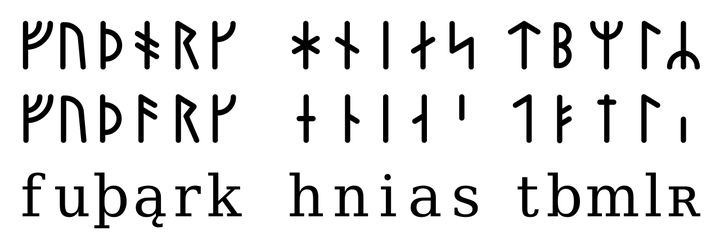
The Younger Futhark is the runic alphabet of the Viking Age: only 16 runes, used for Old Norse. Nearly all the runestones of Scandinavia are carved in it.
What is the Younger Futhark?
A streamlined version of the Elder Futhark with only 16 runes, adapted for Old Norse during the Viking Age. With fewer runes for more sounds it was less precise, leading to creative spelling. It is most common on runestones, often commemorating the dead or marking events.
It came in two main forms: the long-branch runes, and the short-twig runes. Scholars have long thought the long-branch form was the monumental one and the short-twig the everyday form for messages on wood, though the lines are not strict: the Rök stone itself is carved in short-twig runes. Close to 6,000 Younger Futhark inscriptions are known — far more than survive from the Elder Futhark — among them the Rök and Jelling stones.
Where was the Younger Futhark used?
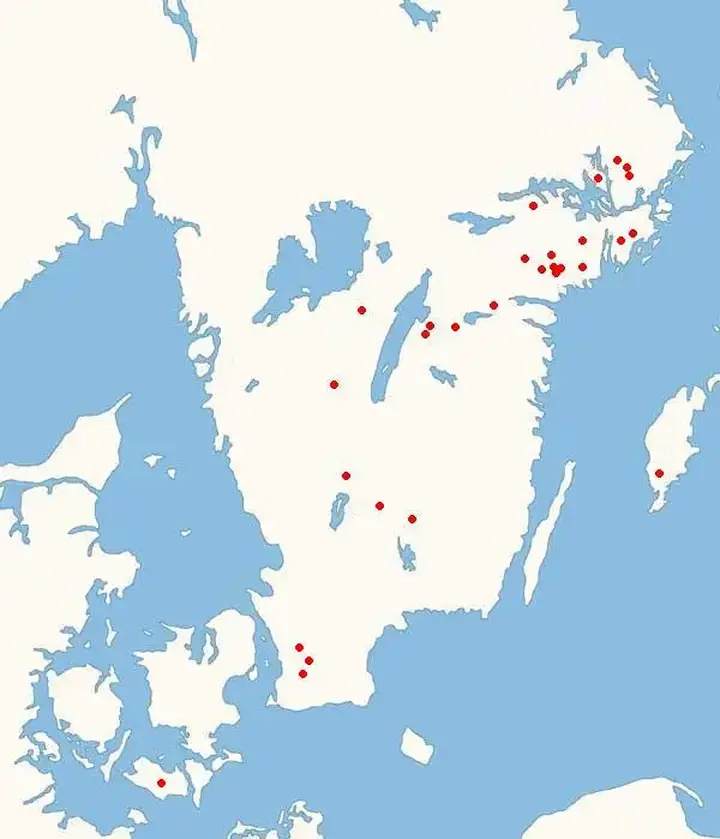
Younger Futhark dominated Viking Age Scandinavia — Sweden, Norway, Denmark and Iceland. Of roughly 3,000 runestones in Scandinavia, Sweden holds the great majority (1,700–2,500): Uppland has the world's densest concentration (about 1,300) and Södermanland is next (391). Denmark has around 250, including the Jelling stones, a UNESCO site; Norway about 50, with notable carvings in the east; and Iceland none. It travelled with Norse settlers to Iceland, Greenland and parts of the British Isles, such as the Isle of Man. The script came in three regional variants: long-branch (Danish, formal), short-twig (Swedish–Norwegian), and staveless (Hälsinge) runes.
It grew from the Elder Futhark. The Jelling Stones are carved in it, and so is the Bluetooth logo.
Questions
How many runes are in the Younger Futhark?
16.
What are long-branch and short-twig runes?
The two main forms of the Younger Futhark. Short-twig runes have smaller strokes and were quicker to carve.