Study › Runes & Norse › Sigrblót (Beltane)
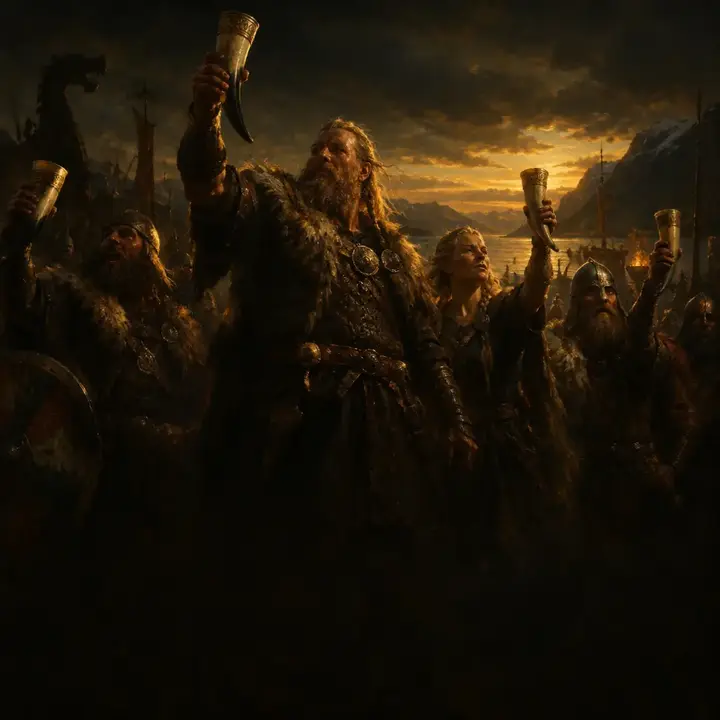
Sigrblót was the sacrifice "at summer, for victory", held as summer began. Iceland still keeps its First Day of Summer as a holiday in April.
When is Sigrblót?
When: at the start of summer, in mid to late April. In the old Norse year there were only two seasons, and summer began with the month of Harpa; Iceland still keeps its First Day of Summer as a holiday on the first Thursday after 18 April. The Celtic Beltane, the counterpart on the modern wheel, falls on 1 May.
What Sigrblót is about
What it is about: victory and setting out. The Ynglinga saga tells that the third great sacrifice of the year was held 'at summer, for victory'. It opened the season when the ships could sail again, when trading, raiding and travelling began, and when every venture needed the gods' favour.
Archetypes and energies
Archetypes and energies: Odin, giver of victory; Thor, protector of all who travel; and Freyja, lady of the summer's life and love. Its energy is courage, action, success, and the full force of life returning.
How Sigrblót is kept
Rituals: a sacrifice and feast for victory; blessing ships, tools and journeys before setting out; swearing oaths for the season's undertakings; and, in the Icelandic custom that survives from the old calendar, giving summer gifts to family and friends on the First Day of Summer.
Read the Wheel of the Year, the blót and Odin.
Questions
When is the First Day of Summer in Iceland?
The first Thursday after 18 April.
What does Sigrblót mean?
A sacrifice for victory.