Study › Runes & Norse › Blót
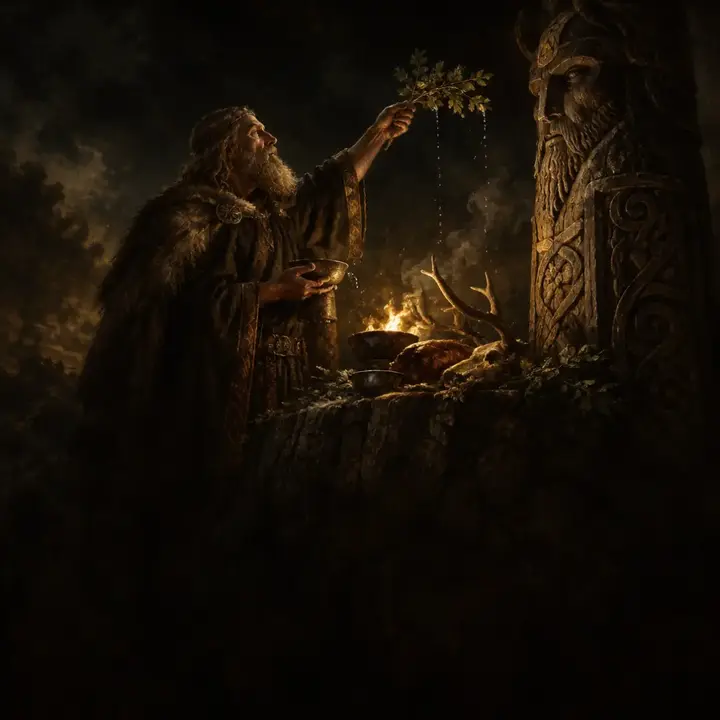
The blót was the central rite of Norse religion: an offering to the gods, the elves or the dead, followed by a shared feast. The gods were not only fed but invited to the table.
What was a blót?
The blót was the central rite of Norse religion: an offering to the gods, the elves or the dead, followed by a shared feast. The saga of Hakon the Good gives the fullest description, of a great blót held by Earl Sigurd at Lade in Norway.
The offering
Animals, horses among them, were slaughtered, and their blood, the hlaut, was caught in bowls. With twigs like sprinklers the blood was sprinkled over the altars, the walls of the temple and the people gathered there, so that all were made one with the offering. The meat was boiled in cauldrons over fires down the middle of the hall, and everyone ate together.
The toasts
Then the cups were passed over the fire and blessed. The first was drunk to Odin, for victory and the power of the king; the next to Njord and Freyr, for good harvests and peace; then a toast to departed kinsmen. The gods were not only fed at a blót — they were invited to the table, and the community renewed its bond with them.
Read about the sumbl, the temple at Uppsala and Hakon the Good.
Questions
Who were the toasts at a blót drunk to?
First Odin, then Njord and Freyr, then departed kin.
What was the hlaut?
The blood of the offering, sprinkled over the altars and the people.