Study › Runes & Norse › Runes after the Viking Age
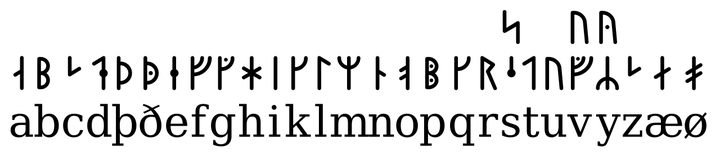
After the Viking Age the runes slowly gave way to the Latin alphabet, but they did not vanish. Medieval dotted runes matched Latin sounds, and in Dalarna, Sweden, runes were carved into the 20th century.
Runes after the 11th century
After the Anglo-Saxon Futhorc, runes went into a gradual decline in practical use across Europe, driven by cultural, religious and technological change — most notably the spread of Christianity and the adoption of the Latin alphabet. Yet they adapted: after the 12th century, as Christianity spread in Scandinavia, medieval "dotted runes" expanded the alphabet to better match Latin phonetics, and runes coexisted with Latin script into the 14th–16th centuries.
The late Middle Ages
By the late Middle Ages, printing presses and standardized Latin alphabets marginalized runes. Even so, they survived in rural areas like Dalarna, Sweden, into the 19th century, still used for calendars and inscriptions.
In Dalarna the old letters grew into the Dalecarlian runes, a mix of runes and Latin letters that peasants still carved on houses, furniture and bowls when Carl Linnaeus visited in 1734. Runic calendars — wooden staves marking the days, the feasts and the cycles of the moon — were in everyday use across rural Sweden until the 19th century, and in Dalarna runes were still carved for decoration into the early 20th.
They grew from the Younger Futhark, which grew from the Elder Futhark.
Questions
What are dotted runes?
Medieval runes with dots added, to match the sounds of the Latin alphabet.
When did people stop using runes?
In most places by the late Middle Ages, but in Dalarna, Sweden, runes lasted into the 19th and 20th centuries.