Study › Runes & Norse › The Anglo-Saxon Futhorc
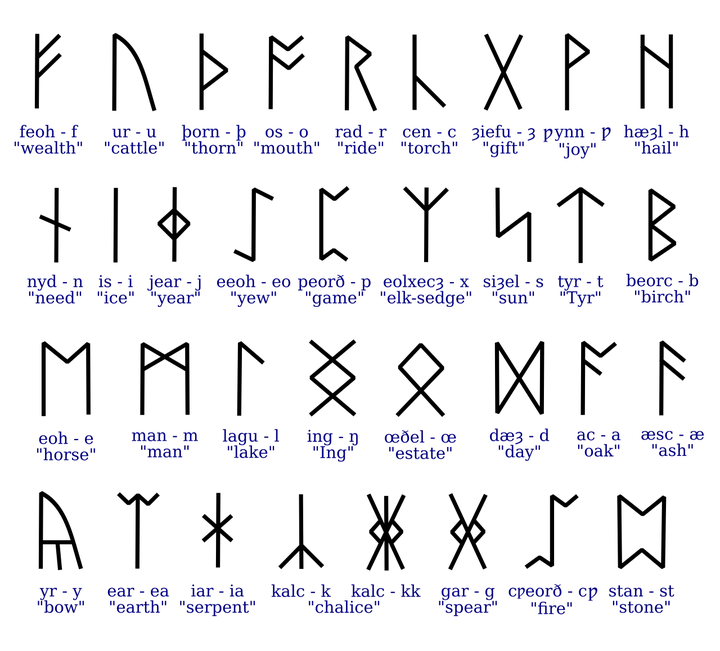
The Anglo-Saxon Futhorc is the runic alphabet of Old English: the Elder Futhark grown to 26 runes or more to fit new sounds. It was used in England from about the 5th century to the 11th.
What is the Anglo-Saxon Futhorc?
An expanded version of the Elder Futhark, with 26–33 runes, tailored to Old English phonetics. It developed after the Anglo-Saxon settlement of Britain and added runes such as os and ac. It appears in inscriptions, manuscripts and religious contexts.
It was in use from about the 5th to the 11th century, and the Old English Rune Poem gives a verse for each of its runes. Its best-known monuments are the Ruthwell Cross, carved with lines of the poem The Dream of the Rood — the longest runic text in Old English — and the Franks Casket, a carved whalebone box of the early 8th century now in the British Museum.
Where was the Futhorc used?
The Anglo-Saxon Futhorc was used mainly in England, across Anglo-Saxon territories. Finds cluster in eastern and southern England (Kent, East Anglia, Northumbria) and northern England — including the Ruthwell Cross in Dumfries, Scotland, though technically Northumbrian. Finds in Wales and southern Scotland are rare. Fewer than 200 objects bearing futhorc inscriptions survive.
Futhorc runes also appear on a few coins of the 7th and 8th centuries, and a closely related form of the script was used across the North Sea in Frisia, which is why scholars often call it the Anglo-Frisian futhorc.
It grew from the Elder Futhark, as did the Younger Futhark.
Questions
How many runes are in the Anglo-Saxon Futhorc?
Between 26 and 33, depending on the time and the place.
Why is it called futhorc?
In Old English the fourth rune's sound became "o", so its first six runes spell f, u, th, o, r, c.