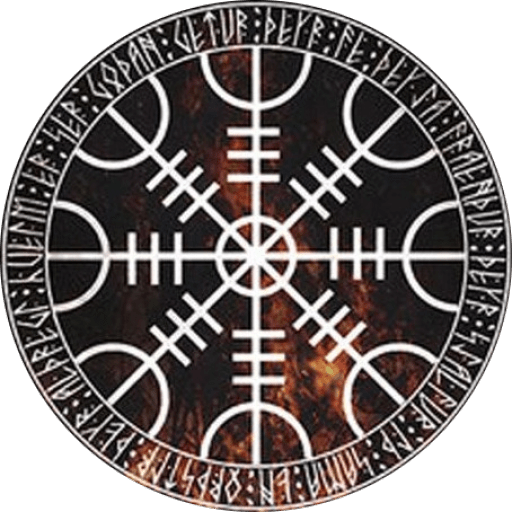
Runes are the letters of runic alphabets.
There are several known runic alphabets and the oldest runic alphabet is called The Elder Futhark.
Why such a name “Futhark”? Because the first 6 letters are Fehu, Uruz, Thurisaz, Ansuz, Raidho, Kenaz.
In total Elder Futhark has 24 runes.
Here are all the runes in The Elder Futhark:

In some rune sets the symbols might differ a bit.
Runes are crafted with straight, angular lines. These shapes weren’t random; they were designed for carving into hard surfaces like wood, stone, or metal, making them practical for a nomadic, rugged lifestyle of the ancient people.
Inscriptions in Elder Futhark were found on artifacts including jewelry, amulets, plateware, tools, and weapons, as well as runestones, dating from the 2nd to the 8th centuries.
Let’s look at some of the runic artifacts.

The oldest runic artifact found is the Svingerud Runestone (photo above), found in a grave in Hole (west of Oslo), Norway, it was created between 1 and 250 CE. This runestone is about 2000 years old.

The Kylver stone is a Swedish runestone which dates from about 400 AD. It is notable for its listing of each of the runes in the Elder Futhark.


Möjbro Runestone from Hagby, Uppland, Sweden, created in 400-550 AD. This 2.5 meters tall runestone is about 1500 years old.

The Snoldelev Stone is a 9th-century runestone that was originally located at Snoldelev, Ramsø, Denmark.


Another interesting runic artifact is The Seax of Beagnoth (also known as the Thames scramasax) is a 10th-century Anglo-Saxon seax (single-edged knife). It was found in the inland estuary of the Thames in 1857, and is now at the British Museum in London.