Study › Runes & Norse › Jól (Yule)
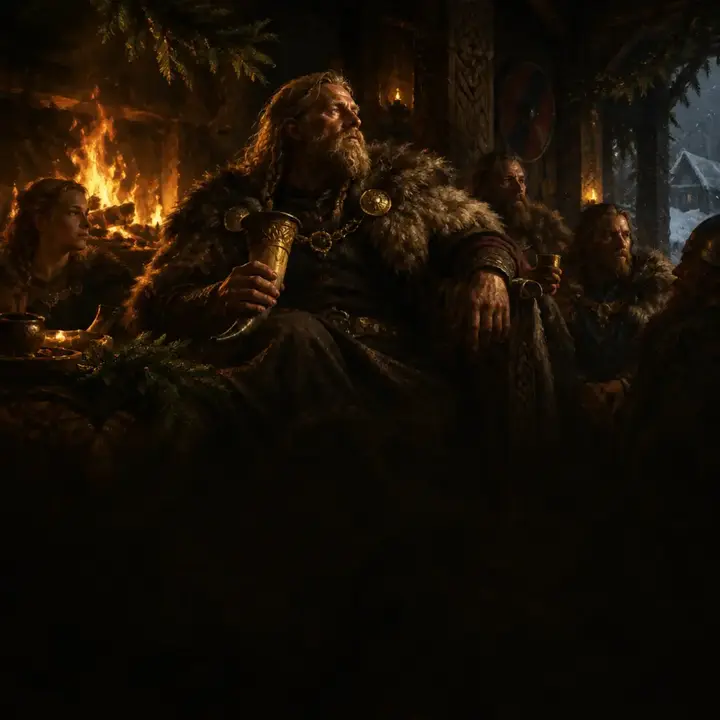
Yule, in Old Norse Jól, is the midwinter feast, the greatest of the Norse year. Today it is kept at the winter solstice, often for twelve nights: the longest night, when the light begins to return.
When is Yule?
When: today, at the winter solstice, 21 December, and many keep it as twelve nights, from the solstice to the new year. The old Norse Yule fell later, beginning on 'midwinter night', around the middle of January, and lasted for days; the Norwegian king Hakon the Good moved it earlier, to fall with Christmas, in the 10th century.
What Yule is about
What it is about: in modern practice, the longest night and the return of the sun — at the deepest point of the dark the year turns, and from here the light grows again. For the Norse, Yule was the greatest feast of the year: a time of the dead walking, of kin gathering, and of making the promises that carry the household through to spring.
Gods and energies of Yule
Archetypes and energies: Odin, who is called Jolnir, 'the Yule one', and who in later Scandinavian folklore leads the Wild Hunt across the winter sky; Freyr, lord of sunshine, rain and plenty; and the ancestors, who are near at this season. Its energy is rebirth, endurance, hope in the dark, and kinship.
Yule customs
Rituals: feasting and drinking the Yule ale, and swearing oaths on the sonargöltr, the sacred boar, for the year to come, as the sagas describe. To these, later centuries and modern practice added burning a Yule log, bringing in evergreens as a sign of life that does not die, keeping watch through the longest night with candles to welcome the sun back, and leaving food for the dead and the house spirits.
It is one of the feasts of the Wheel of the Year; Odin rides with the Wild Hunt: see Odin.
Questions
What does Jól mean?
It is the Old Norse name for the midwinter feast; English Yule comes from the same word.
Who is Yule's god?
Odin, called Jolnir, "the Yule one", and Freyr, lord of plenty.