Study › Runes & Norse › The Vimose Comb
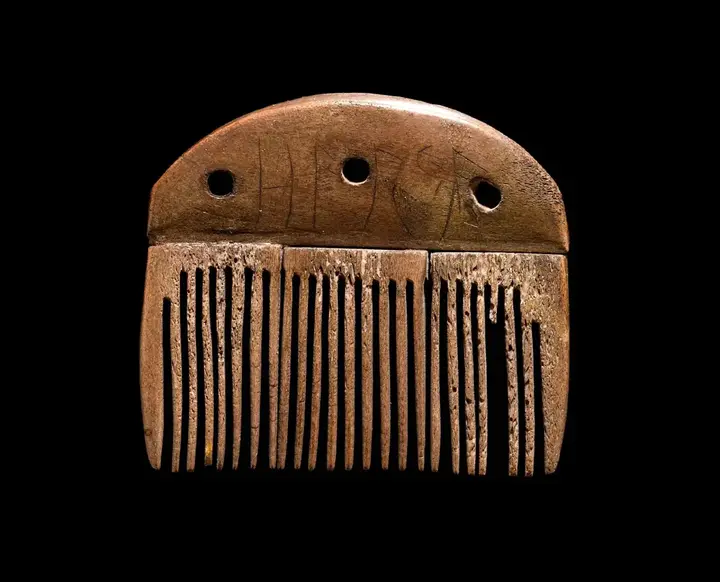
The Vimose Comb, found in a bog on Funen, Denmark, dates to about 160 CE. It carries one of the earliest known runic inscriptions.
What is the Vimose Comb?
The Vimose Comb was discovered in the Vimose bog on the island of Funen, Denmark, and dates to approximately 160 CE. Made from bone or antler, it carries one of the earliest known runic inscriptions. The comb is significant because it shows that runes were already being used for personal objects during the Roman Iron Age, centuries before the Viking Age. Its inscription is among the earliest examples of the Elder Futhark and helps researchers understand the beginnings of Germanic writing.
Read the Elder Futhark and the Kovel spearhead.
Questions
How old is the Vimose Comb?
About 160 CE.
What is it made of?
Bone or antler.