Study › Runes & Norse › Vetrnætr (Samhain)
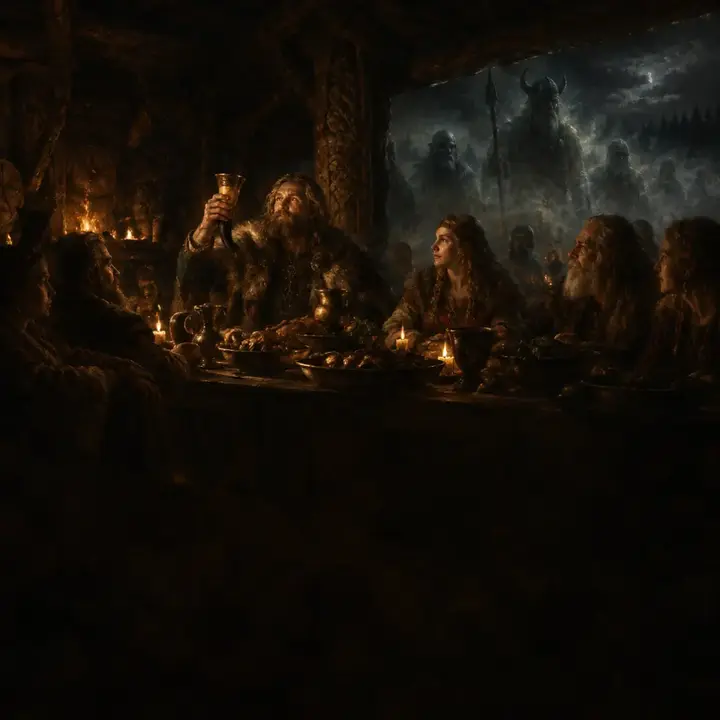
Vetrnætr, the Winter Nights, marked the start of winter in mid to late October. The old sources name a sacrifice "toward winter, for a good year", and families turned to their own dead and spirits.
When is Vetrnætr?
When: at the start of winter, in mid to late October. In the old Norse year winter began on a Saturday in late October — in Iceland still marked as the First Day of Winter, the Saturday between 21 and 27 October — and Vetrnætr, the 'Winter Nights', were the nights leading into it. The Celtic Samhain, its counterpart on the modern wheel, falls on 1 November.
What Vetrnætr is about
What it is about: the turn into the dark half of the year. The Ynglinga saga names a sacrifice 'toward winter, for a good year'. Animals that could not be fed through the winter were slaughtered, the dead drew close, and families turned inward to their own hearth and their own spirits.
Archetypes and energies
Archetypes and energies: the ancestors and the dísir; the álfar, the elves; Freyr, lord of Alfheim and of plenty; and Odin, lord of the dead. Its energy is remembrance, the ancestors, protection, and the inward turn of winter.
How Vetrnætr was kept
Rituals: a feast for a good winter; the private Álfablót, an offering to the elves held behind closed doors — around 1019 the poet Sigvatr was turned away from a farm because the family was holding one; the Dísablót in the western lands; remembering the family's dead by name; and setting out food for them and for the spirits of the land.
Read about the elves, the dísir and the Wheel of the Year.
Questions
What is the álfablót?
A private offering to the elves, held behind closed doors.
Is Vetrnætr the same as Samhain?
It is its Norse counterpart on the modern wheel; Samhain falls on 1 November.