Study › Runes & Norse › Várblót (Ostara)
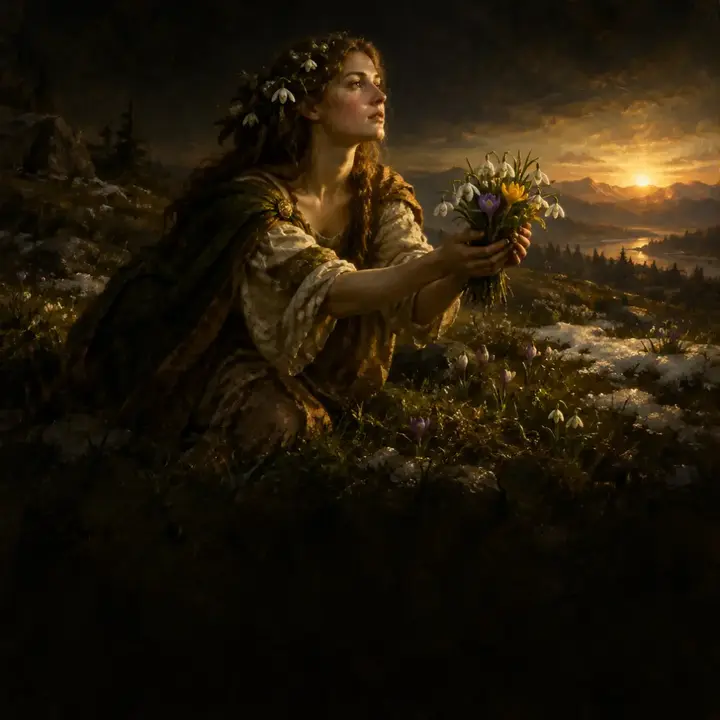
Várblót is the modern heathen feast of the spring equinox, around 20 March, when the light begins to win. It is a feast of new beginnings and planting.
When is Várblót?
When: at the spring equinox, around 20 March, when day and night are equal and the light begins to win. Vár simply means 'spring'. This feast is a modern heathen one: the Norse sources do not name a spring equinox festival. The better-known name Ostara comes from the Anglo-Saxon goddess Eostre, mentioned by the monk Bede, whose name also lives on in Easter.
What Várblót is about
What it is about: balance and awakening. The snow draws back, the ground softens, the birds return, and the work of the new growing year begins. It is the moment of planting — in the fields and in one's own life.
Archetypes and energies
Archetypes and energies: Freyr and Freyja, lord and lady of fertility and growth; Sol, the Sun, gaining strength; and Idunn, keeper of the apples of renewal. Its energy is new beginnings, fertility, balance and fresh growth.
How Várblót is kept
Rituals: blessing seeds and the tools of the year's work before sowing; decorating eggs as a sign of new life; greeting the sunrise; clearing and cleansing the home after the winter; and setting intentions for what one wants to grow in the months ahead, the way a seed is set in the ground.
Read about Freyr, Idunn and the Wheel of the Year.
Questions
What does vár mean?
"Spring".
Where does the name Ostara come from?
The Anglo-Saxon goddess Eostre, named by the monk Bede.