Study › Runes & Norse › Miðsumar (Litha)
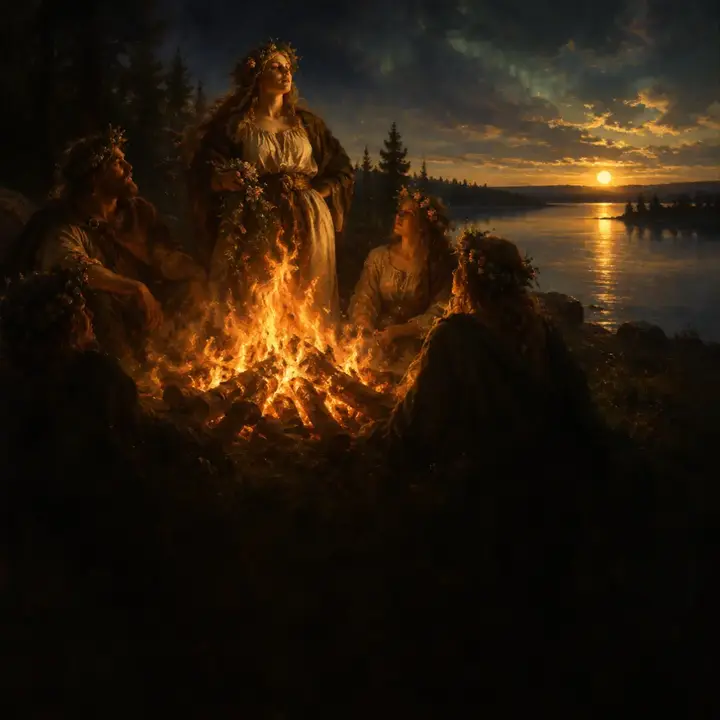
Miðsumar, midsummer, is the feast of the summer solstice, the longest day. It is a modern heathen festival built on later Scandinavian midsummer customs.
When is Midsummer?
When: at the summer solstice, around 21 June, the longest day. In Scandinavia it is kept on Midsummer Eve: Sweden celebrates it on the Friday between 19 and 25 June, while Norway and Denmark light their fires on the eve of St John, 23 June. No Norse midsummer feast is named in the old sources: this is a modern heathen festival built on later Scandinavian midsummer customs, and the name Litha, used on the modern wheel, was coined in 1974.
What Midsummer is about
What it is about: the sun at the height of its power, and the light that never quite leaves the northern sky. It is the peak of the year's life and warmth — and the turning point from which the days begin to shorten again.
Archetypes and energies
Archetypes and energies: Sol at her strongest; Baldr, the shining god, whose death many later writers read as the sun's turn toward winter; and Freyr and Freyja, lords of fertility and love. Its energy is abundance, joy, love, healing and fullness.
How Midsummer is kept
Rituals: lighting bonfires on hills and by the shore; dancing around the midsummer pole decked with leaves and flowers, as Sweden still does; gathering healing herbs, believed strongest on this night; bathing in the dew; and, in an old Swedish custom, young people placing seven kinds of flowers under their pillow to dream of their future love.
Read about Sol and Mani, Baldr and the Wheel of the Year.
Questions
Is Midsummer an old Norse feast?
No Norse midsummer feast is named in the old sources; today's is built on later customs.
Where does the name Litha come from?
It was coined in 1974.