Study › Runes & Norse › Haustblót (Mabon)
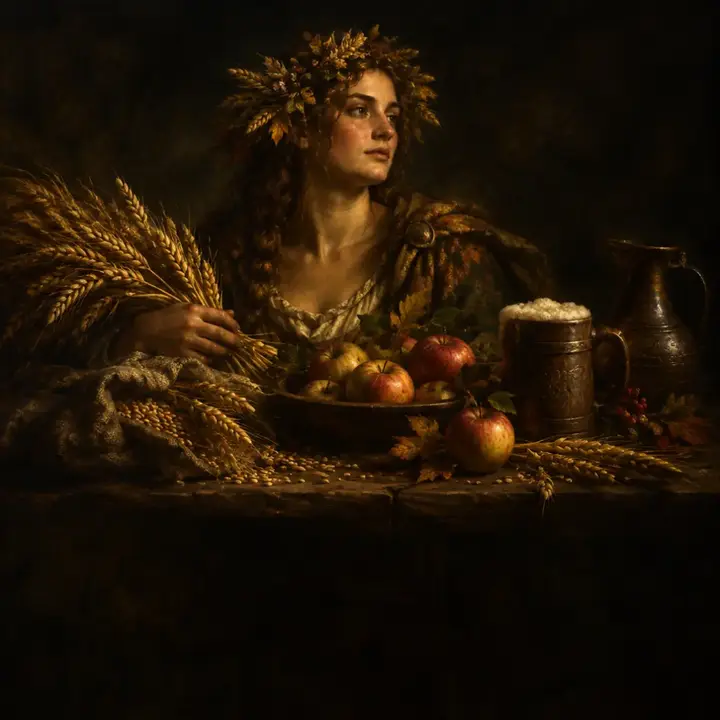
Haustblót is the modern heathen feast of the autumn equinox, around 22 September. It gives thanks for the completed harvest as the year tips toward winter.
When is Haustblót?
When: at the autumn equinox, around 22 September, when day and night are equal again and the dark begins to win. Haust means 'autumn'. This festival is a modern heathen one; the old sources place the great autumn feast later, at the start of winter. The better-known name Mabon, taken from a figure in Welsh legend, was given to the autumn equinox only in 1974.
What Haustblót is about
What it is about: the completed harvest, and the balance tipping toward winter. The last of the crops are in, the stores are counted, and what has been gathered must last through the dark months. It is a time to give thanks and to take stock.
Archetypes and energies
Archetypes and energies: Skadi and Ullr, gods of the hunt and the coming cold; Frigg, who keeps the household's stores; and Freyr, whose harvest is now gathered. Its energy is balance, gratitude, completion and preparation.
How Haustblót is kept
Rituals: a harvest feast shared with family and neighbours; offerings of the fruits of the year; putting up food for the winter; the first hunt of the season; and looking back on the year's work — what was sown, what grew, and what is being carried into winter.
Read about Skadi, Ullr and the Wheel of the Year.
Questions
What does haust mean?
"Autumn".
Where does the name Mabon come from?
A figure in Welsh legend; it was given to the autumn equinox only in 1974.