Study › Runes & Norse › Hakon the Good
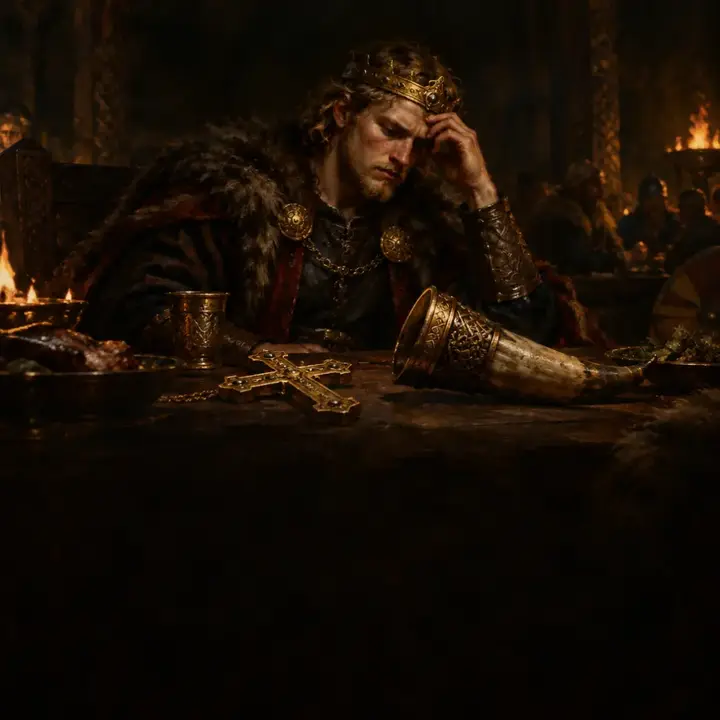
Hakon the Good was a king of Norway in the 10th century, raised a Christian in England. He died of his wounds after the battle of Fitjar in 961, and the poem Hákonarmál sends him to Valhalla.
Who was Hakon the Good?
Hakon the Good was a king of Norway in the 10th century, a son of Harald Fairhair, and, the sagas say, a foster son of King Æthelstan of England, who had him baptised. Back in Norway he ruled a people who still kept the old gods, and he gave way to them again and again at their sacrificial feasts. In 961 he fought his nephews, the sons of Eric Bloodaxe, at Fitjar, won the battle and died of his wounds. The skald Eyvindr skáldaspillir then made Hákonarmál for him: the valkyries Göndul and Skögul choose him, and he rides to Valhalla, where the gods welcome him. A king raised a Christian, received among the einherjar — the poem is one of the last great songs of the old faith, made at the very moment it was giving way.
His great blót is described in Blót, the sacrificial feast; the valkyries who chose him are in the names of the valkyries. He fought the sons of Eric Bloodaxe.
Questions
Was Hakon the Good a Christian?
Yes. He was baptised in England, but gave way to his pagan people again and again.
What is Hákonarmál?
The poem the skald Eyvindr made for him, in which the valkyries choose him for Valhalla.