Study › Runes & Norse › Dísablót (Imbolc)
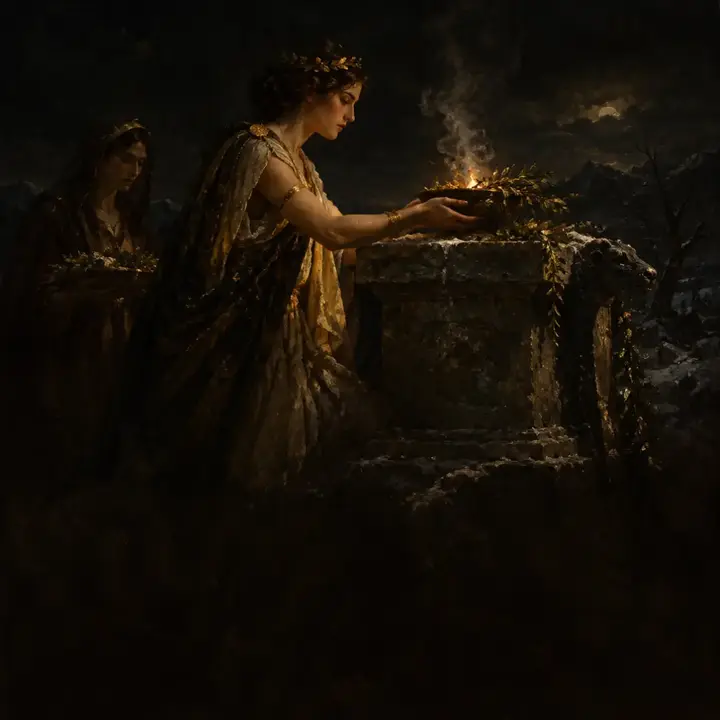
Dísablót is the feast of the dísir, the female spirits who guard a family. Modern heathens keep it in early February, around the Celtic Imbolc.
When is Dísablót?
When: the old sources disagree. In Norway and Iceland it seems to have been held at the start of winter; in Sweden, Snorri describes a great sacrifice at Uppsala in the month of Gói, from mid-February to mid-March, which came with the assembly and market called the Disting, the 'assembly of the dísir', still held there each February. Modern heathens usually keep it in early February, around the Celtic Imbolc on 1 February.
What Dísablót is about
What it is about: honouring the dísir — the female spirits of a family, its foremothers and guardians, who watch over the kin, its children and its fate. It comes at the hardest point of late winter, when the household most needs protection and the first signs of the returning year appear.
Archetypes and energies
Archetypes and energies: Frigg, mother and keeper of the home; Freyja, called Vanadís, 'the Dís of the Vanir'; and the Norns, who shape fate. Its energy is protection, lineage, the strength of women, and the hearth.
How Dísablót is kept
Rituals: an offering at the hearth to the family's foremothers; speaking the names of the women of the line; a shared meal with a place set for the dísir; blessing the house and its children for the year; and asking the dísir for guidance and protection in what is to come.
Read about the dísir, Frigg and the Wheel of the Year.
Questions
What are the dísir?
The female spirits of a family, its foremothers and guardians.
What is the Disting?
The assembly and market at Uppsala in February, "the assembly of the dísir".