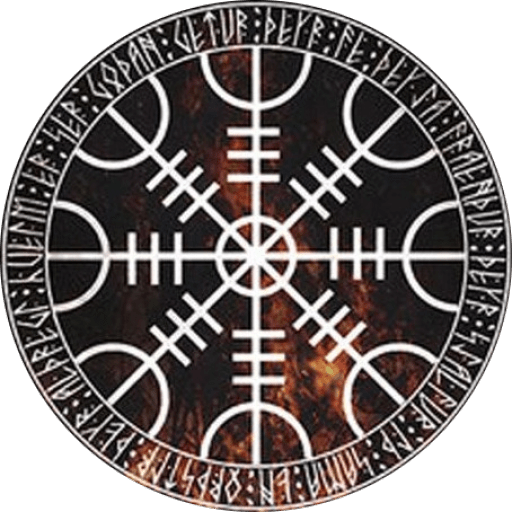
Throughout the history of humanity there were many runic alphabets other than The Elder Futhark, which is the oldest one.
Elder Futhark (2nd–4th century)
The earliest runic alphabet, consisting of 24 runes.
Used for Proto-Germanic languages; each rune had a phonetic value and often a symbolic meaning.
Inscriptions are short, often found on portable objects (jewelry, weapons) or memorial stones.
Runes of Elder Futhark:

Geographic Distribution
Northern Europe: Widespread across modern-day Scandinavia (Sweden, Norway, Denmark), Germany, and parts of the Netherlands and Poland.
Key Areas
- Southern Scandinavia (Denmark and southern Sweden).
- Northern Germany (e.g., along the North Sea coast).
- Scattered finds in the British Isles and as far east as Ukraine (via Gothic migrations).
Artifacts related to Elder Futhark runes were found in next locations in Europe:

Younger Futhark (8th–12th century)
A streamlined version of Elder Futhark with only 16 runes, adapted for Old Norse during the Viking Age.
Less precise (fewer runes for more sounds), leading to creative spelling.
Common on runestones, often commemorating the dead or marking events.
Runes of Younger Futhark:


The Rök runestone (Swedish: Rökstenen; Ög 136) is one of the most famous Younger Futhark runestones. Created in 800 CE.
It can now be seen beside the church in Rök, Ödeshög Municipality, Östergötland, Sweden.
Geographic Distribution
Scandinavia: Dominant in Viking Age Scandinavia—Sweden, Norway, Denmark, and Iceland.
Key Areas
- Central and southern Sweden (e.g., Uppland, with over 1,000 runestones).
- Eastern Norway (fewer stones, but notable carvings).
- Denmark (Jelling stones, a UNESCO site).
- Norse settlements: Iceland, Greenland, and parts of the British Isles (e.g., Isle of Man).
Anglo-Saxon Futhorc (5th–11th century)
An expanded version of Elder Futhark, with 26–33 runes, tailored to Old English phonetics.
Developed after Anglo-Saxon settlement in Britain; includes runes like ᚩ (os) and ᚪ (ac).
Used in inscriptions, manuscripts, and religious contexts.
Runes of Anglo-Saxon Futhorc:


The Malton Pin displays part of the Anglo-Saxon rune order: ᚠ, ᚢ, ᚦ, ᚩ, ᚱ, ᚳ, ᚷ, ᛚ, ᚪ, ᚫ, and ᛖ (“f, u, th, o, r, c, g, l, a, æ, and e”). Created in the 8th century.
Geographic Distribution
British Isles: Primarily in England, especially Anglo-Saxon territories.
Key Areas
- Eastern and southern England (Kent, East Anglia, Northumbria).
- Northern England (e.g., Ruthwell Cross in Dumfries, Scotland, though technically Northumbrian).
- Rare finds in Wales and southern Scotland.
Runes after 11th century
After the Anglo-Saxon Futhorc, runes underwent a gradual decline in practical use across Europe, including in Anglo-Saxon England.
This shift was driven by cultural, religious, and technological changes—most notably the spread of Christianity and the adoption of the Latin alphabet.
Medieval Runes
After the 12th century, as Christianity spread in Scandinavia, runes adapted. They expanded again (e.g., the “dotted runes”) to better match Latin phonetics and coexisted with Latin script into the 14th–16th centuries.

Late Middle Ages (1300 – 1500 CE)
By the late Middle Ages, printing presses and standardized Latin alphabets marginalized runes, though they survived in rural areas like Dalarna, Sweden, into the 19th century for calendars and inscriptions.
Runes Today
Due to technological advancements carving runes into wood and stone was no longer required so runes as a writing system died.
And instead, the magical aspects of the ancient runic alphabets naturally surfaced.
What makes runes magical and powerful?
Once widely used, runes became a dead language.
The presence of runes was still strong in the collective unconscious.
The deep archetypal energy of each rune was no longer diluted by mundane everyday usage.