Study › Runes & Norse › Útiseta
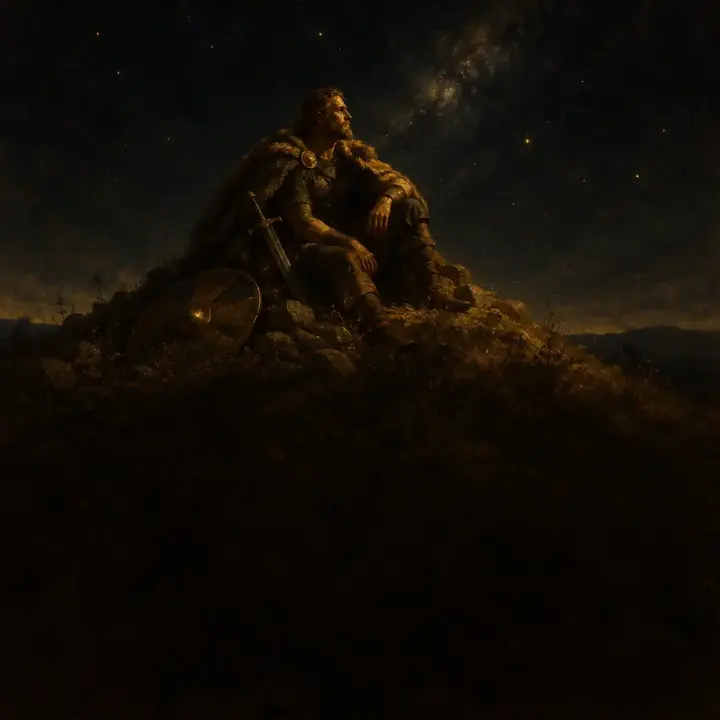
Útiseta, "sitting out", was the Norse practice of sitting alone at night, often on a burial mound, to seek knowledge from the dead and the spirits of the land.
What is útiseta?
Útiseta, 'sitting out', was the practice of going out alone at night, often to a crossroads or to sit upon a burial mound, to seek knowledge from the dead and the spirits of the land. It was a quiet, solitary rite: to sit still in the dark and wait for what would come.
Útiseta in the sources
The Völuspá itself opens its central vision with the words 'alone she sat outside' — the seeress sitting out when Odin comes to question her. Mounds were believed to hold the dead who knew what the living could not, and in the sagas people sit on grave mounds to receive poetry, counsel or sight.
Útiseta today
We know how widespread it was partly from the laws that tried to end it. Medieval Norwegian Christian law forbade 'sitting out' to wake trolls or to seek to know the future. Modern practitioners of rune magick still use útiseta as a form of meditation and inner journeying: a night alone, in stillness, open to what the land and the dead may say.
It belongs with seiðr, the land spirits and the dead in their mounds.
Questions
Where did people sit out?
Often at a crossroads or on a burial mound.
Was útiseta forbidden?
Medieval Norwegian Christian law forbade sitting out to wake trolls or know the future.