Study › Runes & Norse › Teiwaz
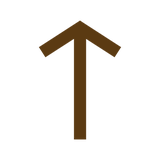
Tiwaz (ᛏ), also spelled Teiwaz, is the seventeenth rune of the Elder Futhark and the rune of the god Tyr. Its meaning is discipline, justice, courage and sacrifice: an arrow that knows its direction and goes there. Reversed, the aim is lost.
Keywords: discipline, justice, sacrifice, courage, direction
What does the Teiwaz rune mean?
Teiwaz is the seventeenth rune of the Elder Futhark. It comes after Sowilo, and Berkana comes after it.
Teiwaz opens Tyr's Aett, the third family of eight runes.
Also given as Tiwaz, it belongs to the god Tyr, god of war, and stands for discipline, self-sacrifice, strength, victory and justice. In runic magick it is used for strength and discipline, in workings for victory of any kind, and to fortify character and will. It also represents the steady, consistent effort that real transformation demands. Tyr's story tells how he placed his hand in the jaws of the wolf Fenrir so the gods could bind the beast and be saved — a tale of sacrifice, of choosing the greater good even at great cost to oneself.
Teiwaz and Berkana are opposite archetypes that complete each other. Teiwaz is the male archetype, the warrior. Berkana is the female archetype, the mother. Like a man and a woman in marriage, together they make each other stronger than either one alone, and their union gives them far more power to create in this world.
Teiwaz is justice, inner strength, will and discipline — the capacity to make the right decision, and to sacrifice for it. Such sacrifice may be small: giving up your time to learn something, or trading personal comfort and resources for a greater end. It is also victory and success. And it carries a sense of direction, for the rune is quite literally an arrow — a path, and the will to walk it.
Its god is Tyr, who gave his hand to bind the wolf Fenrir.
Teiwaz in a reading
Teiwaz in love
Upright: Commitment kept. Fairness. Justice. Sacrifices made for love.
Reversed: Commitment broken. Unfair treatment. Giving too much. Fear of commitment. No shared goal.
Teiwaz and money
Upright: Financial discipline. A fair settlement. Short-term sacrifice, long-term gain. Bold financial moves. Clear financial goals.
Reversed: Reckless spending. An unfair deal. Losses for nothing. Fear of risk. Aimless spending.
Teiwaz and health
Upright: A disciplined routine. A fair balance of work and rest. Giving up harmful habits. Courage in facing illness. A clear plan for recovery.
Reversed: No routine. Overwork. Self-sacrifice harms health. Fear of treatment. No plan.
Teiwaz on the spiritual path
Upright: Spiritual discipline. Living justly. Selfless service. Spiritual courage. A clear purpose.
Reversed: A lack of discipline. Injustice. Needless sacrifice. Cowardice. Loss of purpose.
Teiwaz reversed
Reversed, Tiwaz loses its direction. Discipline fails, injustice wins, and sacrifice is wasted. It asks you to find your aim again and hold to it.
Teiwaz in the rune poems
The rune poems are the oldest sources for the runes' meanings. Here is what each one says of Teiwaz, first as written, then in English.
Norwegian Rune Poem
Týr er æinendr ása;
opt værðr smiðr blása.Tyr is a one-handed god;
often has the smith to blow.
Icelandic Rune Poem
Týr er einhendr áss
ok ulfs leifar
ok hofa hilmir.
Mars tiggi.God with one hand
and leavings of the wolf
and prince of temples.
Anglo-Saxon Rune Poem
Tir biþ tacna sum, healdeð trywa wel
wiþ æþelingas; a biþ on færylde
ofer nihta genipu, næfre swiceþ.Tiw is a guiding star; well does it keep faith with princes;
it is ever on its course over the mists of night and never fails.
Questions
How do you pronounce Tiwaz?
Say it "TEE-wahz".
What does the Tiwaz rune look like?
Tiwaz (ᛏ) is an arrow pointing straight up.
Is Tiwaz the same as Teiwaz?
Yes. They are two spellings of the same rune.