Study › Runes & Norse › The Nithing Pole
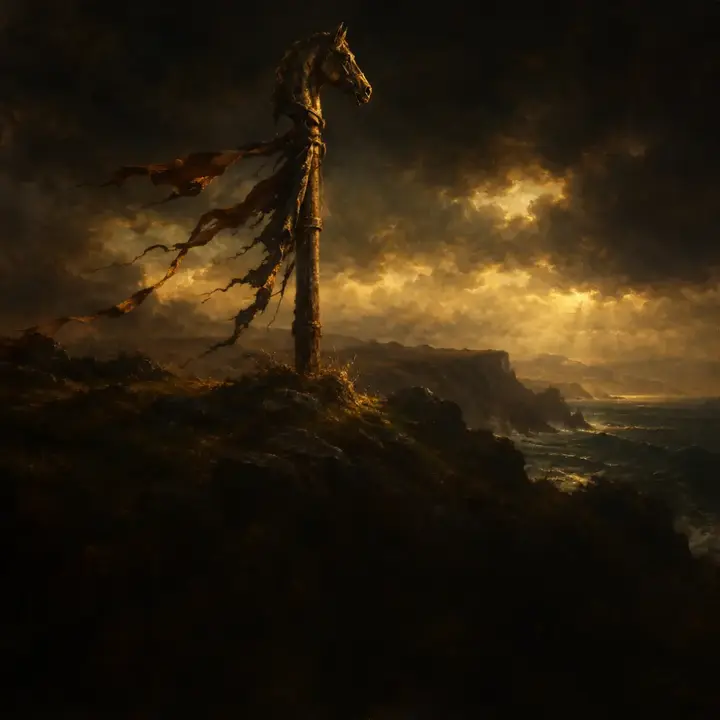
A níðstöng, a nithing pole, was a curse raised against an enemy: a pole topped with a horse's head, carved with runes and turned toward the one to be cursed.
What is a nithing pole?
A níðstöng, a 'nithing pole' or 'scorn pole', was a curse raised against an enemy. It was a long pole topped with a horse's head, freshly cut, sometimes with the horse's skin hung over it, and with the curse carved into it in runes. It was turned to face the one to be cursed.
Egil's nithing pole
The most famous was raised by the poet and rune master Egil Skallagrimsson. Driven out of Norway by King Eirik Bloodaxe and Queen Gunnhild, Egil set up a pole on an island, turned the horse's head toward the mainland, and cursed the land spirits of Norway to wander lost and find no rest until they drove the king and queen from the land. Not long after, Eirik and Gunnhild were indeed forced out of Norway.
Níð, the deepest insult
Níð was the deepest insult in the Norse world — words or images that named someone a coward or worse. It was taken so seriously that Icelandic law punished it harshly, since it was believed not only to shame a person, but to strike them.
Egil cursed the land spirits of Norway; the king was Eric Bloodaxe.
Questions
Who raised the most famous nithing pole?
Egil Skallagrimsson, against King Eirik Bloodaxe and Queen Gunnhild.
What does níð mean?
The deepest insult: words or images naming someone a coward or worse.