Study › Runes & Norse › The Helm of Awe (Ægishjálmur)
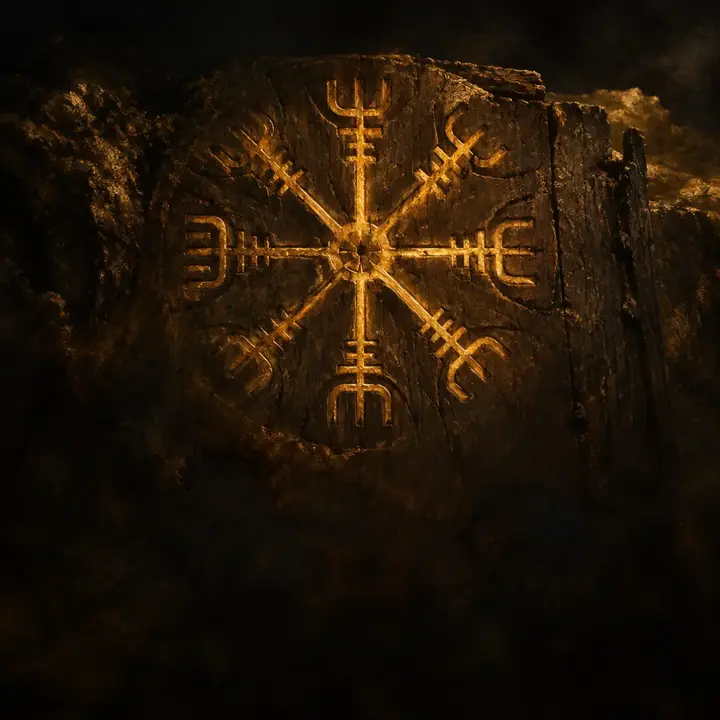
The Helm of Awe, Ægishjálmur (Aegishjalmur), is a sign of eight spiked arms from one point, worn for protection and to overawe an enemy. The name is old, from the Edda; the sign itself comes from Icelandic books of magic of the 1600s.
What is the Helm of Awe?
The Helm of Awe, Ægishjálmur, is drawn as eight spiked staves radiating from a single point, and it is worn or inscribed for protection and the power to overawe an enemy. The name is genuinely old: in the Poetic Edda the dragon Fáfnir boasts of wearing an ægishjálmr, a 'helm of terror', that made all who faced him afraid — but there it is a power, not a picture.
How old is the Helm of Awe?
The familiar eight-armed sign is much later. It survives in Icelandic grimoires — books of magic such as the galdrabækur — written from about the 1600s onward, well after the Viking Age and the conversion to Christianity. So while the idea reaches back into the myths, the symbol drawn on rings and skin today is an early-modern Icelandic magical stave, not a Viking one.
Another Icelandic stave is the Vegvísir; its family is the runic staves.
Questions
Is the Helm of Awe a Viking symbol?
The name is from the Viking-age myths; the drawn sign is an Icelandic magical stave from about the 1600s.
What does the Helm of Awe do?
It is worn for protection and to strike fear into an enemy.