Study › Runes & Norse › Fylgja and Hamingja
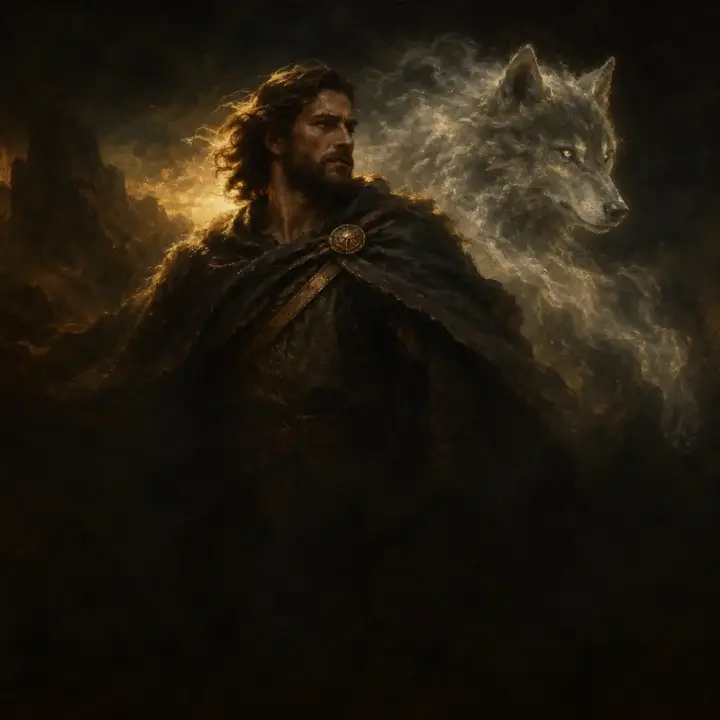
The Norse believed each person was followed by spirits of their own. The fylgja is a following spirit, often an animal, and the hamingja is a person's luck, a real power that could grow, be lost or be passed on.
What are the fylgja and hamingja?
The Norse believed that a person was not a single thing, but was accompanied by spirits and powers of their own. Two of the most important were the fylgja and the hamingja.
The fylgja
The fylgja, 'the follower', is a spirit that accompanies a person throughout life. It often appears in the form of an animal that matches their nature — a bear, a wolf, an eagle, a fox — or as a woman who guards a family through the generations. Most people saw their fylgja only in dreams; to see it while awake was a sign that death was near.
The hamingja
The hamingja is a person's luck: not chance, but a real power that could grow or be lost, that could be passed down in a family, and that could even be lent. In the sagas a chieftain may send his hamingja with a friend on a dangerous journey. When a person died, their luck could pass to a newborn in the family — one reason children were named after the dead.
The guardian spirits of a family are the disir.
Questions
What is a fylgja?
A spirit that follows a person through life, often in an animal's shape.
What is hamingja?
Personal luck, as a real power that can be passed down or lent.